
Psychodrama & Embodied Spirituality
Journal
Psychodrama & Embodied Spirituality
A psycho-spiritual approach to healing trauma through psychodrama, Deep Memory Process, embodiment, and spiritual resources.
Biggi Hofmann & Juanita Puddifoot

Article focus
Trauma work that includes body and spirit.
This article explores how embodiment, spirituality, imagination, and action methods can help people process suffering, reconnect with resource, and move toward greater integration.
A psycho-spiritual approach to healing trauma
We decided to write this paper after inspiring explorations of similarities and differences in the methods of Deep Memory Process (DMP) and Psychodrama Psychotherapy, and how both approaches use spirituality to support and enable clients in processing their traumas.
We agree with C. G. Jung, the Swiss psychiatrist, that as psychotherapists we need to be open to a transpersonal dimension far deeper than our personal egos if we want to help ourselves and our clients working through existential realities: threat of pain and destruction, fate and death, guilt for actions taken or not taken, loss of identity, isolation, meaninglessness and despair.
Other pioneering psychologists have explored the importance of spiritual experiences, psychological recovery and wellbeing, including Roberto Assagioli, James Bugental, Abraham Maslow, Ken Wilber and Stanislav Grof, who argue that individuals are part of and rooted in a greater life, being, awareness and power, which Jung called the Self.
Embodied spiritual work asks not only what happened, but what resource, meaning, and repair can now be called into the room.
DMP was developed by Roger Woolger, a Jungian psychotherapist, who combined Jungian active imagination with inspiration from Reichian body awareness in a vivid psychodramatic replay of internal unconscious issues. DMP gives embodiment and lived experience through psychodrama and body work, with shamanic or spirit journeying and integration between lifetimes derived from the Buddhist bardo wisdom of the Tibetan Book of the Dead.
Psychodrama psychotherapy is primarily a method of group psychotherapy grounded in spirituality, although action methods are increasingly used in individual therapy. J. L. Moreno, the creator of psychodrama, noted the importance of spirituality. He saw the method as a healing theatre and humans as cosmic beings with a divine spark at their core, a divine resource for personal power and creativity.
Psychodrama incorporates group dynamics, role theory, experiential methods and sociometry to assist insight, healing and integration.
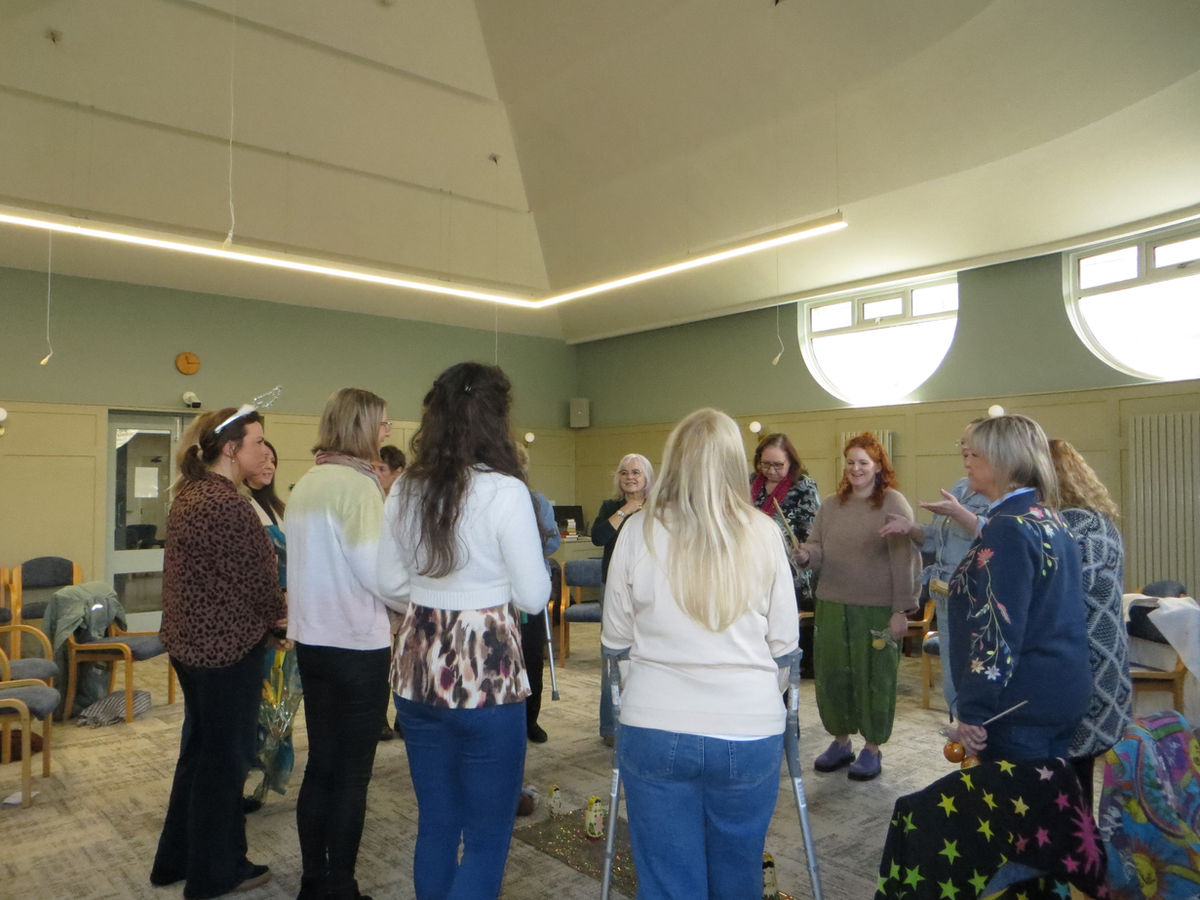
DMP and psychodrama
Though DMP is used to work with a client’s issues from their current life, part of the range of techniques is working with certain residues that would generally be called fantasy figures in classical psychotherapy. In DMP these can also be seen as part of the client’s soul wounds, remnants of unfinished business from past lives.
This can involve working with influences from ancestral energies. In some cases energetic character attachments are viewed as spirits which are completely separate consciousness from the client and part of the wider collective unconscious; whereas in psychodrama all aspects of the drama are seen as part of the protagonist.
In both approaches the story is created in the here and now to reconnect with memories as if they are happening now, and to increase spontaneity. Both methods use props to enable physical connection and evoke unconscious thinking, emotions and actions.
Every part of the body can, when given space and time, express opposing layers of a client’s internal conflict. The legs may want to run and scream, the arms and hands may have something else to say and do, the heart may feel differently, and the head may think something else.
Psychodrama session
In one of the sessions in an ongoing psychodrama group, the selected protagonist, whom I call Fran, wants to find some peace in her despairing heart that is yearning for her son who died by suicide aged sixteen, six years ago. She chooses a small red teddy with the words “I love you” on its chest to be her heart.
Giving her heart a voice, she expresses her despair: the only reason she is still on this earth is to be there for her other children, how much she misses him, and how she longs to give him a hug. She chooses a group member to hold the role of the heart, who gives back the words she has spoken in role.
In the role of her son, he gently takes her heart and holds it close to his heart, speaking softly. He recalls the laughter and loving moments they shared. Back as herself, seeing Andy holding her heart close to his, Fran notes that the feelings of despair and pain are easing.
DMP session
During a five-day DMP training residential, the group is focusing on the physical body as an induction exercise to explore suppressed beliefs, emotions and thoughts in the unconscious. A group participant, whom I call Sarah, is married and in her forties. She wants to work on physical numbness she experiences during the exercise.
Focusing on this area of the body, an image surfaces of a young woman being dragged to a barn, tied up, raped by several men as punishment, tortured with hot pokers, and finally dying in terrible physical pain, humiliated and alone.
The result of the session in Sarah’s life today is change: after exploring and releasing the numbness held unconsciously in the genital area, she is able to have sexual intimacy with her husband and allow herself sexual desire in this area.
Discussion
Surplus reality was coined by Moreno and described by Zerka Moreno as a timeless and spaceless realm where cosmic powers unfold. It is seen as one of the most vital, curative and mysterious elements of psychodrama, and therefore one of its most powerful techniques.
The cathartic process of expressing concealed thoughts and feelings through action in the as-ifness allows the client to express unfinished impulses, create corrective experience, and gain feelings of inner peace, hope, integration and connectedness with different parts of the self.
In DMP, as well as psychodrama, it is important to let the imagination flow where it will and allow the experience to develop without trying to determine in advance what is going to happen, what will be said, or what will be done.
The article’s central thread is integration: psychological depth, embodied process, and spiritual resource held inside careful therapeutic structure.
Conclusion
Psychodrama and DMP are powerful approaches that use spirituality to facilitate change and healing. Both enable and assist the expression of the unconscious, which is seen as a rich and creative source for transformation and integration when working with trauma.
By using the framework of fantasy, grounding this in the now, and providing physicality to the experience, both methods seek to enable the client to gain a transpersonal sense of wholeness on mental, emotional, physical and spiritual levels.
References and further reading
- Wittine B. The Spiritual Self: Its Relevance in the Development and Daily Life of the Psychotherapist.
- Rowan J. The Transpersonal: Spirituality in Psychotherapy and Counselling.
- Moreno ZT, Blomkvist LD and Ruetzel T. Psychodrama, Surplus Reality and the Art of Healing.
Next step
Ask about working with Biggi.
Send a short enquiry about therapy, psychodrama groups, workshops, supervision, retreats, or the best route into the work.
Continue reading
More from the journal
Psychodrama
Introduction to Psychodrama
A clear starting point for understanding the method behind this article.
Journal
The Power of Imagination
Another journal article on imagination, symbolism, and trauma healing.
Workshops
Psychodrama Workshops
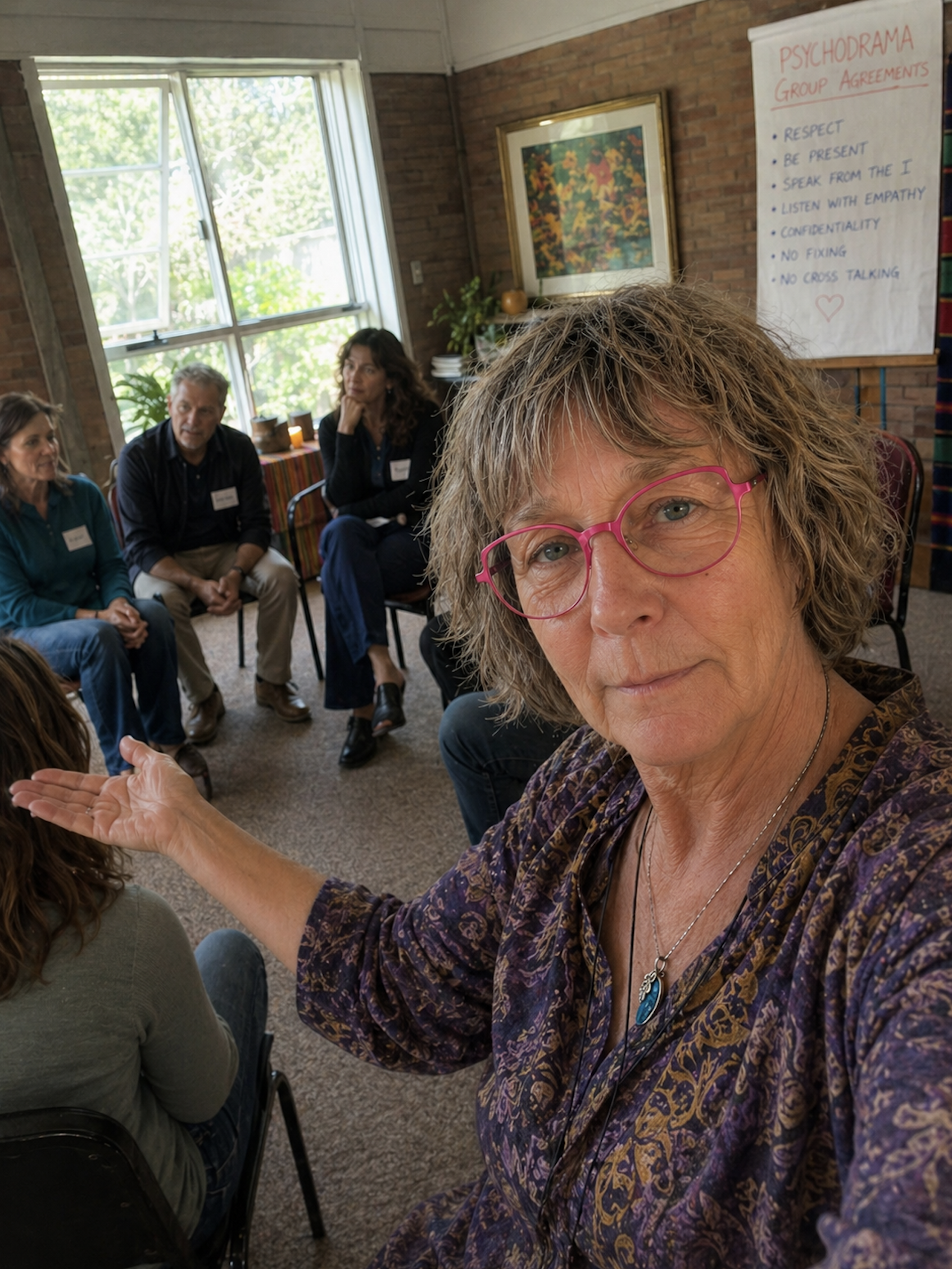
Active group work, retreats, and bespoke facilitation with Biggi.